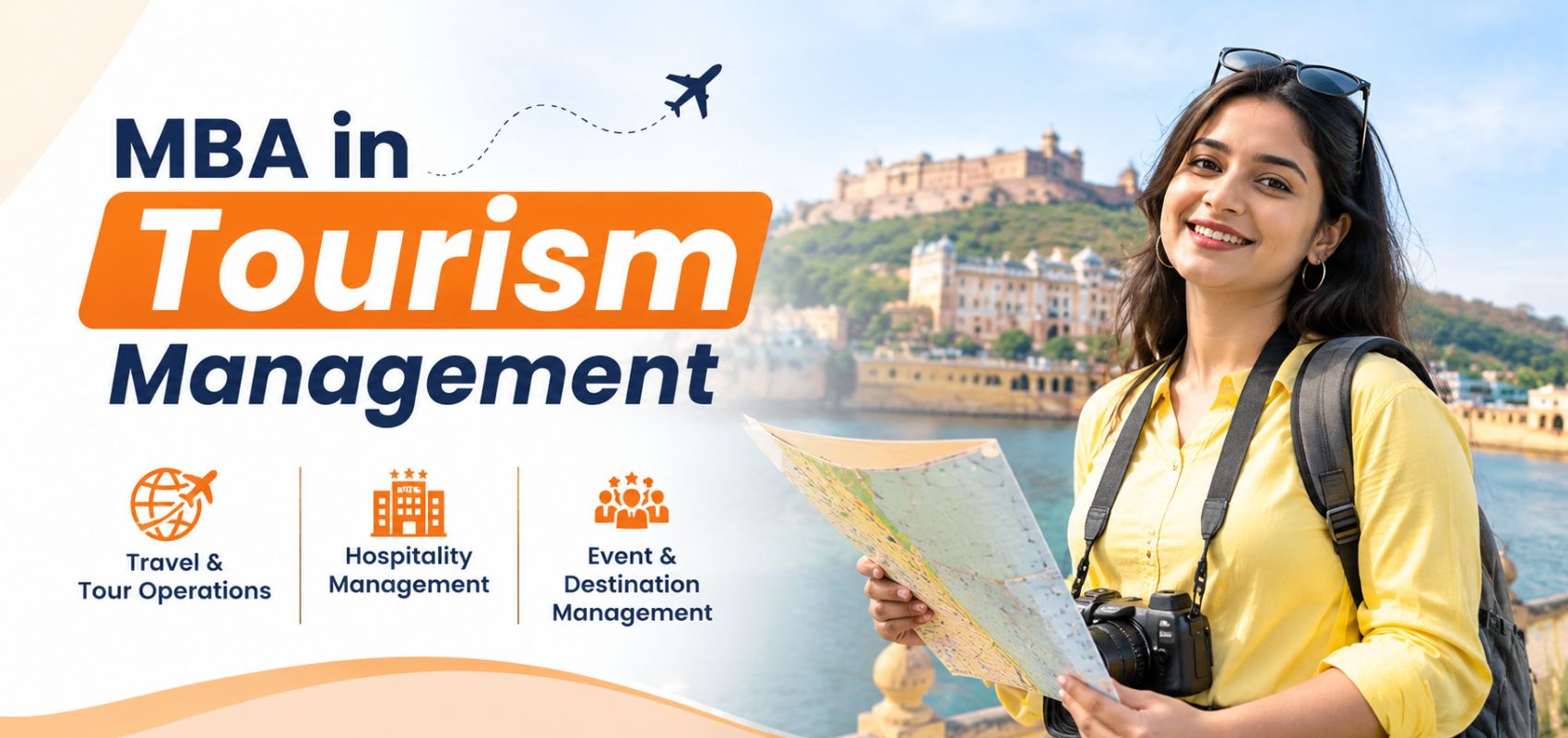
MBA in Tourism Management: Popular Tourism Trends in India
India’s tourism industry is changing. Travellers are no longer interested only in visiting famous monuments or booking a hotel for a short holiday. Many now look for local food, cultural activities, wellness experiences, adventure trips, spiritual journeys and stays that connect them with nature.
This change is creating new opportunities for travel companies, hotels, tour operators, event organisers and destination managers. It is also changing the skills needed to manage tourism businesses.
The Indian tourism industry includes travel agencies, airlines, hotels, resorts, transport services, tourism boards, cruise operators and many small local businesses. As traveller needs become more varied, the demand for skilled managers who understand both tourism and business operations is also growing.
For students interested in this field, an MBA in Tourism Management can help build knowledge of marketing, planning, finance, hospitality operations and customer service. Understanding the latest tourism trends in India can also help students prepare for the changing needs of this industry.
How Is India’s Tourism Industry Changing?
Travellers today have more ways to research, compare and book trips. They can explore destinations through social media, check hotel reviews, compare prices and plan complete journeys using digital platforms.
At the same time, people are showing interest in different types of travel. Some prefer peaceful nature holidays, while others want spiritual experiences, medical treatment, wildlife safaris or luxury stays.
This has encouraged tourism businesses to offer more specialised services instead of depending only on traditional holiday packages. Businesses must now understand different customer groups, manage changing demand and provide reliable travel experiences.
Here are the major trends shaping the future of tourism in India.
1. Growth of Domestic and Experiential Travel
Domestic travel remains an important part of India’s tourism market. Many Indians are exploring destinations within the country for family holidays, weekend trips, short breaks and longer vacations.
Experiential travel is also becoming popular. Instead of only visiting a place, travellers want to take part in local activities such as cooking classes, village walks, traditional art workshops and regional food experiences.
Destinations such as Jaipur, Udaipur, Kerala, Rishikesh and Meghalaya offer different experiences for these travellers.
Business opportunities: Travel companies can create local experience packages, short trips and customised itineraries. Hotels can work with local guides, artists and food businesses.
Challenges: Businesses need to maintain service quality, manage seasonal demand and make sure that local experiences are genuine rather than poorly planned tourist activities.
2. Spiritual and Religious Tourism
Spiritual tourism is an important part of India’s travel market. People travel to religious places for prayer, festivals, religious events and personal peace.
Destinations such as Varanasi, Ayodhya, Prayagraj, Haridwar, Rishikesh, Bodh Gaya and Tirupati attract visitors throughout the year. Large religious gatherings also create demand for transport, accommodation, food and visitor services.
Business opportunities: Tour operators can plan pilgrimage packages, group travel, senior-friendly journeys and accommodation services. Local businesses can provide guides, transport, food and other visitor support.
Challenges: Crowd management, cleanliness, safety, traffic and accommodation planning are major concerns. Tourism managers must coordinate with local authorities and service providers to manage visitors properly.
3. Wellness and Medical Tourism
Wellness tourism focuses on activities that support relaxation and well-being. Travellers may choose yoga, meditation, Ayurveda, spa treatments and healthy retreats.
Kerala is known for Ayurveda and wellness experiences, while Rishikesh attracts visitors interested in yoga and meditation. India also receives international patients seeking medical treatment, supported by hospitals and healthcare service providers.
Medical tourism and wellness tourism are related but different. Medical tourism involves healthcare treatment, while wellness tourism generally focuses on relaxation and preventive well-being.
Business opportunities: Wellness resorts, travel agencies, hospitals and specialised tour operators can develop packages for domestic and international visitors.
Challenges: Businesses must provide clear information, qualified service providers, safe facilities and honest communication. Medical travel also requires careful coordination between hospitals, patients, transport and accommodation providers.
4. Eco-Tourism and Sustainable Travel
Eco-tourism encourages people to explore natural areas while respecting the environment and local communities. Travellers may choose forest stays, nature walks, responsible wildlife experiences and eco-friendly accommodation.
Places such as Sikkim, Meghalaya, the Western Ghats and parts of Uttarakhand offer opportunities for nature-based tourism.
Sustainable travel goes beyond staying in an eco-resort. It also includes reducing waste, saving water, protecting local culture and supporting businesses run by local communities.
Business opportunities: Tourism businesses can develop nature-based packages, community stays and responsible travel experiences.
Challenges: Too many visitors can damage natural areas, disturb wildlife and increase waste. Managers must balance business income with environmental protection and local needs.
5. Adventure and Wildlife Tourism
Adventure tourism attracts people who enjoy physical activities and outdoor experiences. Popular activities include trekking, river rafting, camping, mountain biking, scuba diving and paragliding.
Rishikesh is known for river rafting, Himachal Pradesh and Uttarakhand attract trekkers, and Goa offers water-based activities. Wildlife destinations such as Ranthambore, Kaziranga, Jim Corbett and Bandhavgarh attract visitors interested in nature and animal experiences.
Business opportunities: Adventure operators, camps, wildlife lodges and travel companies can offer specialised packages and guided activities.
Challenges: Safety is essential. Businesses need trained guides, suitable equipment, emergency plans and responsible wildlife practices. Poor management can put visitors and natural habitats at risk.
6. Rural and Cultural Tourism
Rural tourism gives travellers an opportunity to experience village life, local food, crafts, farming activities, festivals and traditional ways of living.
For example, visitors may explore rural Rajasthan, craft villages in Gujarat, traditional communities in Nagaland or village experiences in Kerala.
Cultural tourism also includes heritage walks, museums, historical sites, local festivals, music and regional art.
Business opportunities: Homestays, local guides, craft sellers, food businesses and community tourism groups can earn income from visitors. Tour operators can include village experiences in their travel plans.
Challenges: Tourism should not disturb local life or turn cultural traditions into staged activities. Businesses must work with residents and ensure that communities receive a fair share of the benefits.
7. Luxury and Personalised Travel
Some travellers prefer premium hotels, private transport, personal guides and customised holiday plans. Instead of choosing a fixed group package, they may want a trip designed around their interests, budget and schedule.
Luxury travel in India includes heritage hotels in Rajasthan, premium resorts in Goa, private experiences in Kerala and high-end stays in destinations across the Himalayas.
Business opportunities: Hotels and travel companies can offer personalised itineraries, premium accommodation, private tours and special celebrations.
Challenges: Customers expect high service standards and quick support. Businesses must manage costs, staff training and customer expectations without making promises they cannot deliver.
8. Cruise Tourism
Cruise tourism allows travellers to explore destinations through sea or river journeys. India has opportunities for both coastal and river-based cruise experiences.
River cruises on the Ganga and Brahmaputra offer a different way to explore regional culture, while coastal cruise services connect selected port destinations.
Business opportunities: Cruise operators, hotels, travel agents, local guides and transport companies can work together to offer complete travel experiences.
Challenges: Cruise tourism needs suitable port facilities, safety arrangements, trained staff and proper waste management. Weather and route conditions can also affect travel plans.
9. MICE Tourism and Destination Weddings
MICE stands for Meetings, Incentives, Conferences and Exhibitions. It includes business events, corporate meetings, trade shows and professional conferences.
Cities such as Delhi, Mumbai, Bengaluru, Hyderabad and Goa attract business events because of their hotels, transport connections and event facilities.
Destination weddings are another growing area of specialised travel. Couples may choose Jaipur, Udaipur, Goa or Kerala for wedding celebrations that involve guests travelling from different cities.
Business opportunities: Hotels, event planners, travel agencies, transport companies and catering businesses can provide event-related services.
Challenges: These events need careful budgeting, vendor coordination, accommodation planning and timely execution. A small service failure can affect the experience of many guests.
10. Digital Bookings and AI-Powered Trip Planning
Digital platforms have changed how people plan and book travel. Customers can compare flights, hotels, packages and reviews before making a decision. Social media also helps travellers find destinations and understand what they can expect.
AI-powered tools are adding another layer to trip planning. They can help users explore destinations, prepare draft itineraries and find travel ideas based on their interests. However, travellers still need to verify prices, opening hours, transport details and other important information.
Business opportunities: Travel companies can use digital marketing, customer data and online booking systems to reach customers and improve services. AI tools may also support customer queries and itinerary planning.
Challenges: Businesses must protect customer information, keep booking details accurate and provide human support when automated tools cannot solve a problem.
11. Why Sustainable Tourism Will Matter More
Sustainability connects with almost every tourism trend. A popular destination may attract more visitors, but it also needs enough water, clean surroundings, transport facilities and waste management.
Tourism businesses are increasingly expected to consider their effect on local communities and natural resources. This may include reducing single-use plastic, hiring local workers, buying local products and managing visitor numbers in sensitive areas.
For managers, sustainability is not only an environmental issue. It is also part of long-term business planning. A destination that protects its natural and cultural value is better placed to offer meaningful experiences over time.
How Does an MBA in Tourism Management Help Students?
An MBA in Tourism Management helps students understand how tourism businesses are planned, marketed and managed. The exact subjects depend on the university and programme, but tourism-focused management education may cover areas such as:
- Tourism marketing: Understanding traveller needs and promoting destinations, hotels and travel services.
- Hospitality operations: Managing accommodation, guest services, food services and daily hotel operations.
- Destination planning: Developing travel experiences while considering transport, infrastructure, local culture and the environment.
- Business and financial management: Preparing budgets, studying costs, managing revenue and making business decisions.
- Customer experience: Handling feedback, improving service quality and building long-term customer relationships.
- Technology and analytics: Using digital platforms, booking systems and customer data to improve business decisions.
- Sustainable tourism: Understanding how tourism can support local communities and protect natural and cultural resources.
These skills are useful because tourism businesses need people who can understand customers and manage the business behind each travel experience.
Students comparing management programmes can also explore the Online MBA course details to understand general management subjects and available specialisations. The right programme should match the student’s career goal and learning needs.
Career Opportunities After MBA in Tourism Management
There are different career opportunities in tourism management across private companies, public organisations and independent businesses.
Some possible roles include:
- Tourism Manager: Plans and manages tourism services, packages or destination activities.
- Travel Operations Manager: Looks after bookings, schedules, vendors and daily travel operations.
- Hotel or Resort Manager: Manages guest services, staff, budgets and hotel operations.
- Destination Marketing Executive: Promotes a city, region or tourism product to selected customer groups.
- Event and MICE Manager: Plans conferences, exhibitions, corporate events and related travel arrangements.
- Tour Product Manager: Designs travel packages based on customer interests and business needs.
- Business Development Executive: Builds partnerships and brings new customers to tourism businesses.
- Entrepreneur: Starts a travel agency, homestay, tour service, event company or specialised travel business.
Career options depend on the programme, practical experience, communication skills, location and employer requirements. Students can also read about career options after an Online MBA in India to understand how management skills apply across different industries.
What Skills Will Tourism Professionals Need in the Coming Years?
The future of tourism in India will require more than destination knowledge. Professionals will need a mix of business, service and technology skills.
Important skills include:
- Clear communication and customer handling
- Digital marketing and online booking knowledge
- Budgeting and financial planning
- Team management and problem-solving
- Travel planning and vendor coordination
- Data understanding and basic analytical skills
- Knowledge of local culture and responsible tourism
- Ability to use technology while checking information carefully
Students can start developing these skills through internships, part-time work, industry projects and practical exposure to hotels, travel agencies or event companies.
FAQs
1. What is an MBA in Tourism Management?
An MBA in Tourism Management is a postgraduate management programme focused on the travel, tourism and hospitality industry. It helps students understand business operations, tourism marketing, customer service, destination planning and management.
2. Is MBA in Tourism Management a good career option in India?
It can be a suitable option for students who enjoy travel, hospitality, customer service and business management. The industry offers different work areas, but career growth depends on skills, experience and the type of organisation.
3. What is the duration of an MBA in Tourism Management?
Many full-time MBA programmes in tourism and travel management are designed for two years and divided into four semesters. However, duration and study mode can differ between institutions.
4. Who can apply for MBA in Tourism Management in India?
Graduates from different academic backgrounds may be eligible. Some universities require a recognised bachelor’s degree, while others may have minimum marks, entrance exam or selection requirements. Students should check the rules of their chosen institution.
5. What subjects are taught in tourism management?
Common study areas may include tourism marketing, hospitality operations, travel management, business finance, human resource management, destination planning, event management and sustainable tourism.
6. What are the career opportunities after MBA in Tourism Management?
Graduates may explore roles in travel operations, hotel management, destination marketing, event management, tour planning, business development and tourism entrepreneurship. The available roles depend on skills and employer requirements.
7. Can I work in hotels after an MBA in Tourism Management?
Yes. Students may apply for suitable roles in hotel operations, guest relations, sales, marketing, revenue support and business development. Practical hospitality knowledge and relevant experience can be helpful.
8. Is tourism management different from hotel management?
Yes. Hotel management mainly focuses on accommodation, food services and hotel operations. Tourism management has a wider scope that includes travel services, destinations, tour operations, events and visitor experiences.
9. What are the major tourism trends in India?
Important trends include domestic and experiential travel, spiritual tourism, wellness and medical tourism, eco-tourism, adventure travel, wildlife experiences, rural tourism, luxury holidays, cruise tourism, MICE events and digital trip planning.
10. What is the future of tourism in India?
The future of tourism in India is linked to better travel services, digital technology, diverse tourism experiences and responsible destination development. Businesses that understand customer needs and manage resources carefully may be better prepared for changing demand.
Build Management Skills for a Changing Tourism Industry
India offers many types of travel experiences, from spiritual destinations and heritage cities to wildlife areas, wellness retreats and modern business-event locations. As traveller expectations change, tourism businesses need professionals who can manage services, understand customers, use technology and plan responsibly.
An MBA in Tourism Management can help students develop a foundation in business and tourism operations. However, choosing the right course is only one part of career preparation. Industry exposure, communication, practical learning and an understanding of changing tourism trends in India are equally important for building a career in this field.